Vitamin D and Statin Tolerance: What the Evidence Really Shows
 Dec, 16 2025
Vitamin D & Statin Tolerance Assessment Tool
This tool is designed to help you understand if vitamin D deficiency might be contributing to your statin-related muscle symptoms. Based on current medical evidence, vitamin D supplementation may help only if you have severe deficiency (below 20 ng/mL).
Millions of Americans take statins to lower cholesterol and prevent heart attacks. But for up to one in three people, muscle pain or weakness makes it impossible to keep taking them. That’s statin intolerance - and it’s a big problem. If you can’t stay on statins, your risk of heart disease goes up. So when doctors started noticing that many of these patients also had low vitamin D, it seemed like a simple fix: give them more vitamin D, and maybe they can tolerate the statin again.
Why Vitamin D Got Attention
Around 2009, a small study caught the eye of clinicians. Researchers found that 92% of patients who couldn’t tolerate statins because of muscle pain saw their symptoms vanish after correcting low vitamin D levels. That’s a striking number. Suddenly, vitamin D wasn’t just about bones anymore. It was being linked to muscle health, and statin side effects suddenly had a potential solution. In the years that followed, more observational studies piled up. Doctors started checking vitamin D levels in patients who complained of muscle aches on statins. And time and again, they found the same pattern: low vitamin D - often below 20 ng/mL - showed up in patients with statin-induced myopathy. One 2017 study found that among patients with severe deficiency, 90% were able to restart statins after taking supplements. That’s a huge win for someone who’s been told they can’t take a life-saving medication.The Science Behind the Link
Vitamin D isn’t just a vitamin. It acts like a hormone in your body, and muscle tissue has receptors for it. When levels drop too low, muscles can weaken, become sore, and even break down. That’s not unlike the muscle pain caused by statins. So when someone has both low vitamin D and takes a statin, it’s hard to tell which one is causing the problem - or if they’re teaming up. Some researchers think the issue might be metabolic. Statins like atorvastatin and simvastatin are broken down by liver enzymes called CYP450. Vitamin D also depends on these same enzymes. If vitamin D is low, maybe those enzymes get backed up, making statins stick around longer and cause more muscle damage. One study even found that people taking atorvastatin had higher vitamin D levels than those on other statins - suggesting statins themselves might affect vitamin D metabolism in ways we don’t fully understand yet.The Big Contradiction: RCT vs. Observational Data
Here’s where things get messy. All those hopeful observational studies? They weren’t designed to prove cause and effect. They just showed a pattern. And patterns can be misleading. Maybe people with low vitamin D are less active, eat worse, or have other health problems that make them more likely to feel muscle pain. That’s called confounding - and it’s a big reason why observational studies can trick us. Then came the 2022 JAMA Cardiology study - a massive, randomized, double-blind trial with over 2,000 participants. This was the gold standard. People were randomly assigned to take either 2,000 IU of vitamin D daily or a placebo while starting a statin. After a year, there was no difference. Both groups had the same rate of muscle pain (31%) and the same rate of stopping statins (13%). This didn’t just challenge the idea - it shattered it. If vitamin D helped, this study should have shown it. It didn’t. And this was a well-funded, well-designed trial backed by the NIH. So why did earlier studies look so good? One possibility: placebo effect. When patients hear their doctor says, “Your vitamin D is low - we’re going to fix this,” they feel hopeful. That hope can ease pain, even if the supplement isn’t doing anything physiologically. Muscle pain from statins is subjective. It’s not a blood test. It’s how you feel. And feelings can be influenced by belief.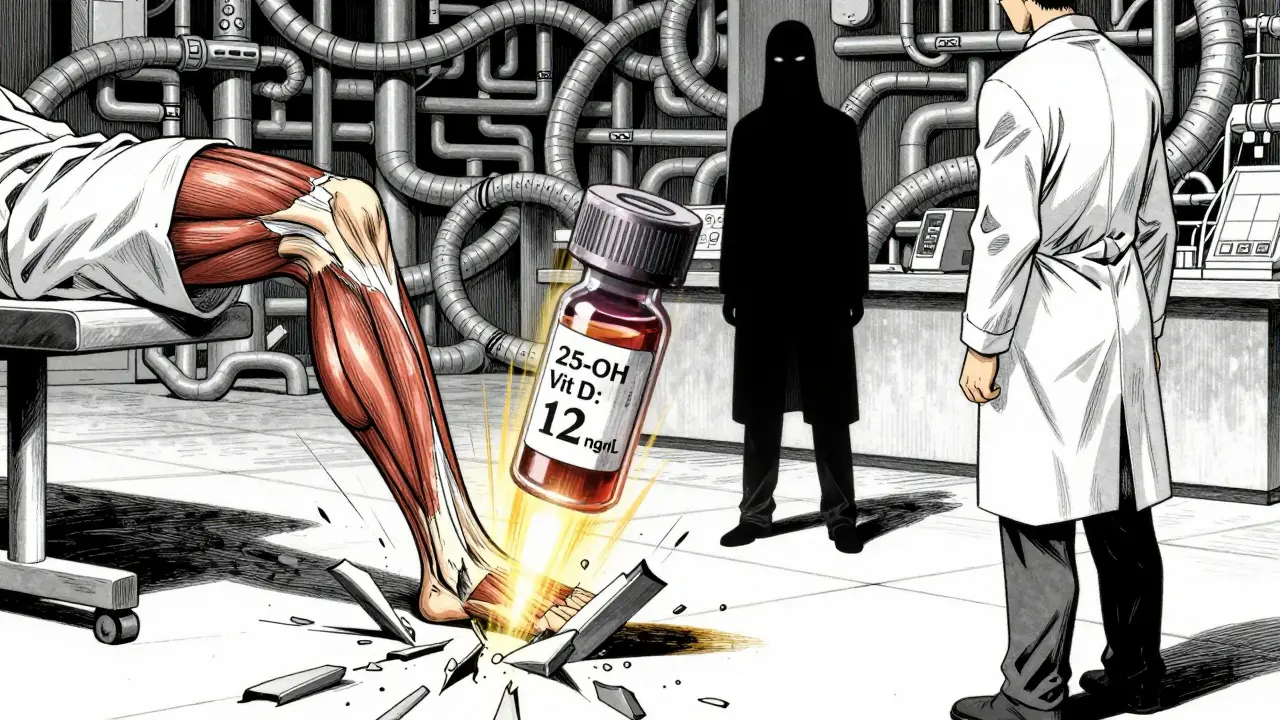
What Do Experts Actually Do?
Despite the JAMA study, many doctors still check vitamin D levels in statin-intolerant patients. Why? Because in real life, they see results. One lipid specialist reported that after correcting vitamin D in patients who failed multiple statins, over half were able to take one again - even if only at a lower dose. That’s meaningful for someone who’s been told they can’t take statins at all. Some clinicians still recommend testing vitamin D in anyone who reports muscle pain on a statin. If it’s below 20 ng/mL, they’ll supplement with 2,000-4,000 IU daily for a few months, then try the statin again. If it works? Great. If not? At least they ruled out one possible contributor. The 2017 study also found something interesting: after correcting vitamin D, patients did better on certain statins. Pravastatin and rosuvastatin were better tolerated than others. That’s worth knowing. Maybe it’s because they’re less dependent on the CYP450 system. If you’ve had trouble with atorvastatin or simvastatin, switching to one of these after fixing vitamin D might be a smarter move.Who Might Still Benefit?
The JAMA study didn’t rule out benefit for everyone. It ruled out benefit for the general population. But what about the 10-15% of patients with severe deficiency - those under 20 ng/mL? The earlier studies showed dramatic improvement in this group. The JAMA trial didn’t analyze outcomes by baseline vitamin D level. That’s a gap. If you’re one of those people with vitamin D levels below 20, and you’ve had muscle pain on statins before, it’s still reasonable to try supplementation. You’re not risking much - vitamin D is safe at these doses. And if it helps? You’re back on a medication that cuts your heart attack risk by a third.
What Should You Do?
If you’re on a statin and having muscle pain:- Don’t stop the statin without talking to your doctor.
- Ask for a vitamin D blood test. Ask specifically for 25-hydroxyvitamin D.
- If your level is below 20 ng/mL, ask about supplementing with 2,000-4,000 IU daily for 8-12 weeks.
- After retesting, if your level is above 30 ng/mL, talk about trying a different statin - pravastatin or rosuvastatin are often better tolerated.
- If your vitamin D is normal, don’t take extra supplements hoping for relief. It won’t help.
The Bottom Line
Vitamin D doesn’t fix statin intolerance for most people. The best science says that. But for a small group - those with true, severe deficiency - it might be the key that unlocks their ability to stay on statins. That’s not nothing. This isn’t about taking a supplement to cure a side effect. It’s about removing a barrier that’s keeping people from getting proven, life-saving treatment. If your vitamin D is low, fix it. It’s good for your bones, your immune system, and maybe - just maybe - your heart.But don’t assume it will solve your muscle pain. If you’re still having trouble after correcting vitamin D, your doctor can help you find another option - lower dose, different statin, or non-statin therapies. The goal isn’t to make vitamin D the hero. It’s to make sure you’re on the right treatment - whatever that is.
Can low vitamin D cause statin muscle pain?
Low vitamin D can cause muscle weakness and pain on its own, which may overlap with statin-induced muscle symptoms. In people with severe deficiency (below 20 ng/mL), the combination may make muscle pain worse or harder to distinguish. But low vitamin D alone doesn’t cause statin myopathy - it may just make you more sensitive to it.
Should I take vitamin D if I can’t tolerate statins?
If your vitamin D level is below 20 ng/mL, yes - supplementing can help. Many patients in this group regain tolerance to statins after correction. But if your level is normal or only slightly low, taking extra vitamin D won’t improve your tolerance. Testing is key.
Which statin is best after fixing vitamin D deficiency?
Pravastatin and rosuvastatin are often better tolerated after vitamin D correction. These statins are less dependent on liver enzymes that may be affected by low vitamin D. Avoid high-dose simvastatin or atorvastatin initially - they’re more likely to cause muscle issues.
Does vitamin D help with all types of statin side effects?
No. Vitamin D supplementation is only potentially helpful for muscle-related symptoms like pain, weakness, or cramps. It doesn’t help with liver enzyme changes, digestive issues, or increased blood sugar - other known statin side effects.
Is it safe to take vitamin D with statins?
Yes. Taking up to 4,000 IU of vitamin D3 daily with statins is safe for most people. There are no known dangerous interactions. Always check with your doctor if you have kidney disease, sarcoidosis, or other conditions that affect calcium metabolism.
How long does it take for vitamin D to help with muscle pain?
It usually takes 6 to 12 weeks for vitamin D levels to rise and for muscle symptoms to improve. Don’t expect quick relief. Recheck your level after 3 months before deciding whether to try a statin again.
Joe Bartlett
December 17, 2025 AT 10:25Man, I’ve been on simvastatin for years and my doc never checked my D levels. Turned out I was at 14. Started supplementing, muscle pain vanished in 6 weeks. No magic, just basic science.
Sachin Bhorde
December 17, 2025 AT 12:14As a lipid specialist, I’ve seen this play out 20+ times. The JAMA trial? Great design, but it treated deficiency as a binary. Real-world patients with <20 ng/mL? They respond. It’s not placebo-it’s physiology. CYP450 competition is real. Pravastatin or rosuvastatin post-repletion? Game-changer. Don’t dismiss clinical anecdotes-they’re data with a pulse.
Marie Mee
December 18, 2025 AT 20:54They’re lying to you about vitamin D because Big Pharma doesn’t want you taking free supplements instead of their billion-dollar statins. I know people who got cured by sun exposure and cod liver oil. The FDA is in bed with Pfizer. Check the sources.
Salome Perez
December 20, 2025 AT 11:44There’s a profound elegance in the interplay between micronutrient physiology and pharmacokinetics-yet the reductionist framing of this debate obscures its nuance. Vitamin D isn’t a panacea, nor is it a red herring; it’s a modulator. For the severely deficient, its role as a co-factor in muscle membrane integrity and calcium flux may indeed mitigate statin-induced myotoxicity. To dismiss this as mere confounding is to misunderstand biological systems as linear rather than dynamic.
Jane Wei
December 21, 2025 AT 00:17I had statin pain for months. Got my D checked-18. Took 4k IU for three months. Tried simvastatin again. Still hurt. Switched to rosuvastatin. Zero issues now. D helped, but the statin swap mattered more.
Jody Patrick
December 21, 2025 AT 04:01Americans think a pill fixes everything. Vitamin D? It’s sunlight. Go outside. Stop taking supplements and start living. We used to be healthy without all this junk.
Naomi Lopez
December 23, 2025 AT 03:21It’s fascinating how the medical community clings to observational data despite RCTs. The JAMA study was impeccably designed-double-blind, NIH-funded, 2,000+ participants. The fact that vitamin D supplementation showed zero benefit undermines the entire hypothesis. This isn’t about ‘individual variation’-it’s about confirmation bias in clinical practice.
Raven C
December 24, 2025 AT 21:37But... what if... the placebo effect is actually the most powerful thing here? I mean, think about it: when you tell someone their vitamin D is low, and then you give them a pill, and they feel better... isn’t that just their brain saying, ‘Ah, the problem is fixed!’? And isn’t that... more profound than the pill itself? I mean, the mind-body connection is the real frontier, isn’t it? And we’re just... ignoring it? Because it’s not quantifiable? And that’s... sad.
Michael Whitaker
December 25, 2025 AT 15:21Actually, I’ve been meaning to ask-have any of you considered that the real issue might be the *form* of vitamin D? Most supplements are D2, but D3 is the biologically active form. And if you’re taking D2, you’re not even getting the benefit you think you are. Also, magnesium is required for D metabolism-so if you’re low in magnesium, D supplementation might be useless. Have you checked your magnesium? I didn’t think so.
Evelyn Vélez Mejía
December 26, 2025 AT 03:49The tension here is not between science and anecdote-it is between the epistemology of population-level inference and the ontology of individual suffering. The RCT says: ‘For the average person, no effect.’ But for the person whose body has been quietly screaming in muscle pain for months, whose life has been reduced to the fear of a heart attack they can’t prevent, the anecdote is not anecdotal-it is existential. To deny the validity of their experience because it doesn’t fit the model is not scientific rigor-it is moral negligence. The goal is not to prove vitamin D works for everyone. The goal is to ensure no one is denied the chance to try.