Thyroid Cancer: Types, Radioactive Iodine Therapy, and Thyroidectomy Explained
 Jan, 27 2026
Thyroid cancer is one of the fastest-growing cancer diagnoses in the U.S., with about 44,000 new cases each year. Yet most people don’t realize how treatable it is - especially when caught early. The good news? For many types, the 10-year survival rate is over 98%. The challenge isn’t always curing it, but knowing exactly what type you have and which treatment makes sense for your situation. Too often, people get pushed into surgery or radioactive iodine therapy without understanding why, or whether it’s even necessary. This isn’t just about removing a tumor. It’s about understanding your body, your risks, and what life looks like after treatment.
What Are the Main Types of Thyroid Cancer?
The thyroid gland has four main cancer types, and they behave very differently. Knowing which one you have changes everything - from treatment to prognosis.
- Papillary thyroid carcinoma (PTC) makes up 70-80% of cases. It grows slowly, often spreads to nearby lymph nodes, but responds extremely well to treatment. Most patients under 45 with small tumors have near-perfect survival rates.
- Follicular thyroid carcinoma (FTC) accounts for 10-15%. It’s more likely to spread through the bloodstream to lungs or bones than to lymph nodes. It’s still highly treatable, especially if caught before it spreads.
- Medullary thyroid carcinoma (MTC) is rare - only 3-5% of cases. It starts in the C-cells that make calcitonin. Some cases are inherited, linked to genetic mutations like RET. Testing for these mutations is now standard for anyone diagnosed with MTC.
- Anaplastic thyroid carcinoma (ATC) is the most aggressive, making up less than 2%. It grows fast, spreads quickly, and is often diagnosed at stage IV. Survival drops dramatically if treatment is delayed - sometimes by just weeks.
Staging works differently depending on your age and cancer type. If you’re under 55 and have papillary or follicular cancer, you’re either stage I or II - no matter the tumor size. Once you hit 55, the staging becomes more complex, with four stages. Anaplastic cancer is always stage IV. This isn’t just bureaucracy - it affects how doctors decide on treatment intensity.
How Radioactive Iodine Therapy Works (and When It’s Needed)
Radioactive iodine therapy (RAI), or I-131, has been used since the 1940s. It works because thyroid cells - including cancerous ones - suck up iodine like a sponge. When you swallow a capsule or liquid containing I-131, the radiation destroys any remaining thyroid tissue without touching other organs.
But here’s the catch: RAI only works on thyroid-derived cancers. That means it’s great for papillary and follicular cancers, but useless for medullary and anaplastic types. Those don’t absorb iodine.
Before RAI, you need to raise your TSH levels. High TSH tells any leftover thyroid cells to grab iodine. You can do this two ways: either stop taking thyroid hormone for 2-4 weeks (which leaves you exhausted, cold, and foggy) or get injections of recombinant human TSH (Thyrogen®), which avoids the hypothyroid symptoms but costs more.
Recent studies show you don’t always need a high dose. The HiLo trial found no difference in outcomes between 30 mCi and 100 mCi for removing small remnants after surgery. That means many patients can get the same benefit with 70% less radiation. Fewer side effects, less risk of long-term damage to salivary glands, lower chance of secondary cancers.
Still, RAI isn’t for everyone. The 2015 American Thyroid Association guidelines now say: Don’t give RAI routinely to patients with tumors under 1 cm without high-risk features. Yet many still get it anyway. One study found up to 30% of papillary thyroid cancer patients get overtreated with unnecessary surgery or RAI.
Thyroidectomy: What Surgery Really Involves
Surgery is the first step for nearly all thyroid cancers. But not all surgeries are the same.
- Lobectomy removes just one side of the thyroid. Used for small, low-risk tumors. Recovery is quick - often same-day discharge. But if cancer is found later to be more aggressive, you’ll need a second surgery to remove the rest.
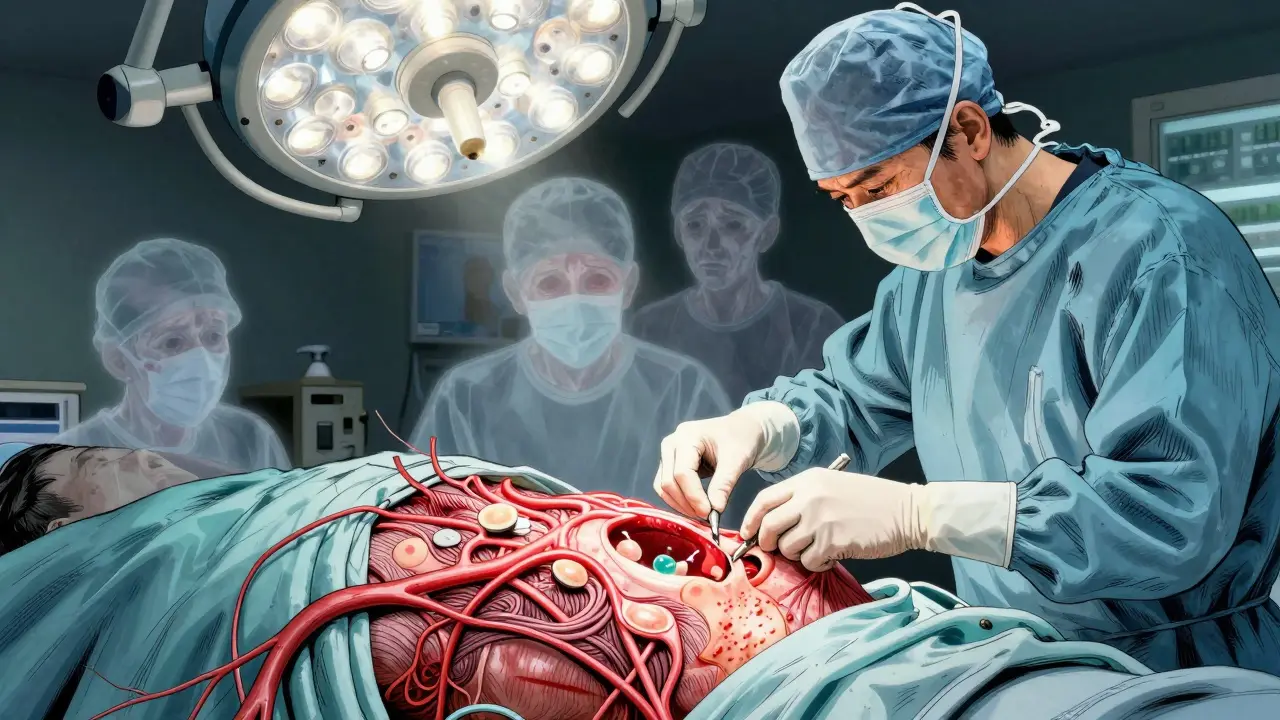
- Total thyroidectomy removes the entire gland. This is standard for tumors over 1 cm, if cancer is in lymph nodes, or if you’re getting RAI. The incision is usually 6-8 cm, and you’ll stay in the hospital 1-2 days.
- Completion thyroidectomy is done after a prior lobectomy, if follow-up tests show cancer was more serious than first thought.
Modern surgery uses nerve monitoring to protect the recurrent laryngeal nerves that control your voice. Surgeons need about 25-30 cases to get good at it. With experience, nerve injury rates drop from 12.3% to under 5%. Parathyroid glands - which regulate calcium - are also carefully preserved. Still, about 22% of total thyroidectomy patients end up with permanent hypoparathyroidism and need lifelong calcium supplements.
Some hospitals offer robotic or transoral (through the mouth) approaches. They promise no scar. But a 2020 meta-analysis found complication rates were higher than with traditional open surgery. Most experts still recommend open thyroidectomy for cancer - it gives the best view, the most control, and the lowest risk.
Life After Treatment: What to Expect
After surgery and RAI, you’ll take levothyroxine every day for the rest of your life. It replaces your thyroid hormone. But here’s something most patients don’t talk about: feeling fine on paper doesn’t mean you feel fine in real life.
A survey of over 1,200 thyroid cancer survivors found 68% still had persistent symptoms - fatigue, brain fog, weight gain - even with normal TSH levels. Only 42% said they felt fully recovered. Many blame the hormone replacement, but the truth is more complex. Your body doesn’t just need T4. It needs to convert it to T3, and that process can get disrupted after thyroid removal.
Some people do better on natural desiccated thyroid (NDT), which contains both T4 and T3. But most endocrinologists still prescribe levothyroxine because it’s more predictable. If you’re still tired, ask for free T3 testing. Don’t settle for TSH alone.
Recovery timelines vary. Most people take 2-4 weeks off work after total thyroidectomy. Driving is restricted for 7-10 days. Heavy lifting? No weight over 10 pounds for 3 weeks. Voice changes are common - hoarseness, weakness, or breathiness. Most improve within months, but 31% of patients report lasting changes.
And then there’s the low-iodine diet. It’s not just about avoiding salt. You can’t eat dairy, eggs, bread with iodized salt, seafood, or even some processed foods. One patient described it as “worse than the surgery.” It’s exhausting. But it’s necessary to make RAI work.
What’s New in Thyroid Cancer Treatment
Thyroid cancer treatment isn’t stuck in the past. New drugs are changing outcomes, especially for aggressive types.
For medullary thyroid cancer with RET mutations, selpercatinib (approved by the FDA in 2021) has shown remarkable results - shrinking tumors in over 70% of patients. For anaplastic thyroid cancer with BRAF mutations, the combo of dabrafenib and trametinib doubled median survival from 5.3 to 10.8 months.
Researchers are now trying to “redifferentiate” tumors - turning RAI-resistant cancers back into iodine-eating ones. Selumetinib showed promise in trials, restoring RAI uptake in 54% of patients who previously didn’t respond. That could mean a second chance for people who thought their options were gone.
Future tools like liquid biopsies - blood tests that detect tumor DNA - could replace frequent scans. Instead of annual neck ultrasounds, you might just need a simple blood draw to check if cancer is coming back.
When Less Is More: The Shift Away from Overtreatment
One of the biggest shifts in thyroid cancer care is realizing that not every tumor needs to be removed. For tiny papillary cancers under 1 cm - especially if they’re not near the edge of the gland - active surveillance is now a valid option.
Japanese data shows only 3.8% of these small tumors grow or spread over 10 years. Many patients live out their lives without ever needing surgery. The American Thyroid Association now supports this approach for low-risk cases. Yet in the U.S., over 90% of patients still get surgery. Why? Fear, tradition, or lack of awareness.
If your tumor is small, slow-growing, and you’re otherwise healthy, ask about monitoring. Get an ultrasound every 6 months. If it doesn’t change, you avoid surgery and its lifelong consequences.
The goal isn’t just to survive thyroid cancer. It’s to live well after it. That means avoiding unnecessary procedures, managing side effects, and staying informed about your options - not just what your doctor assumes you want.
Final Thoughts: Your Treatment Should Fit You
Thyroid cancer isn’t one disease. It’s a group of diseases with wildly different behaviors. Your treatment should match your cancer - not a protocol. Don’t let fear push you into surgery or RAI if you don’t need it. Don’t assume your doctor knows all the latest guidelines. Ask about molecular testing. Ask about active surveillance. Ask about lower-dose RAI.
And if you’re struggling with fatigue, brain fog, or voice changes after treatment - you’re not alone. These are real, documented problems. Don’t brush them off. Find a doctor who listens. Your quality of life matters as much as your survival rate.
Is radioactive iodine therapy always necessary after thyroid surgery?
No. For small, low-risk papillary thyroid cancers under 1 cm without aggressive features, RAI is often not needed. The 2015 American Thyroid Association guidelines recommend against routine RAI in these cases. Studies show no survival benefit from RAI for low-risk patients, and it carries risks like dry mouth, taste changes, and potential long-term damage to salivary glands. Many doctors now use lower doses or skip RAI entirely if the tumor was completely removed and no lymph nodes were involved.
What are the risks of thyroidectomy?
The main risks include damage to the recurrent laryngeal nerve (which can cause hoarseness or voice changes) and injury to the parathyroid glands (which can lead to low calcium levels). Permanent voice changes happen in about 31% of patients after total thyroidectomy. Permanent hypoparathyroidism - requiring lifelong calcium and vitamin D supplements - affects about 22%. Nerve monitoring during surgery reduces these risks significantly. In experienced hands, injury rates drop below 5%.
Can thyroid cancer come back after treatment?
Yes, but recurrence is often slow and treatable. Papillary and follicular cancers can return in lymph nodes or lungs years later. Most recurrences are found during routine blood tests (rising thyroglobulin levels) or ultrasounds. If caught early, they’re usually treated with another surgery or RAI. Even in cases with metastasis, many patients live for decades with controlled disease. Anaplastic thyroid cancer is different - it recurs quickly and is harder to treat.
Why do I need to take thyroid hormone for life after surgery?
Your thyroid produces hormones that control metabolism, energy, heart rate, and body temperature. After a total thyroidectomy, your body can’t make these anymore. Levothyroxine replaces T4, the main hormone your thyroid made. Without it, you’d develop severe hypothyroidism - extreme fatigue, weight gain, depression, and heart problems. Taking it daily keeps your body functioning normally. Your dose is adjusted based on TSH levels, usually checked every 6-12 months.
How long does it take to recover from thyroid surgery?
Most people return to light activities within a week. After a lobectomy, many go home the same day. After a total thyroidectomy, you’ll likely stay overnight and need 2-4 weeks to fully recover. Driving is restricted for 7-10 days. Heavy lifting (over 10 pounds) should be avoided for 3 weeks. Voice changes and neck stiffness are common in the first few weeks but usually improve. Full healing of the incision takes about 6-8 weeks.
Colin Pierce
January 28, 2026 AT 00:33Just had my total thyroidectomy last year for a 0.8cm PTC. No RAI, just levothyroxine. My TSH is perfect, but I still get brain fog on bad days. Started taking T3 add-on and holy crap - it’s like waking up from a coma. Docs act like TSH is the only metric that matters. It’s not. Your body needs T3 too. Ask for free T3 tests. Seriously.
Also, the low-iodine diet? I ate nothing but plain chicken, rice, and apples for two weeks. Felt like I was in a cult. But it worked. RAI was clean. No regrets.
Mark Alan
January 28, 2026 AT 00:58😭 I JUST GOT DIAGNOSED AND THEY WANT TO CUT MY THYROID OUT TOMORROW 😭 I’M 28 AND THEY SAID ‘IT’S JUST A SMALL TUMOR’ BUT NOW I’M SCARED I’LL NEVER BE THE SAME 😭
Linda O'neil
January 29, 2026 AT 21:44Hey, I know how scary this feels - I’ve been there. But please don’t panic. You’re not alone. I had papillary cancer at 29, did a lobectomy, and skipped RAI. Now I’m 5 years out, no recurrence, and I hike 10 miles on weekends. Your body is stronger than the fear. Ask for active surveillance if your tumor’s under 1cm. You’ve got options. You’re not a statistic.
And yes, the fatigue sucks. But it gets better. You’ll find your rhythm.
Katie Mccreary
January 30, 2026 AT 17:21So you’re telling me people are still getting full thyroidectomies for tumors smaller than a pea? That’s not medicine, that’s fear-based billing. And RAI? More like radioactive guilt trip. You’re not saving lives - you’re creating lifelong patients who need pills, calcium, and therapy for their ‘thyroid trauma.’
And don’t even get me started on the ‘low-iodine diet.’ It’s a scam designed to sell expensive specialty foods. Eat an apple. Be fine.
SRI GUNTORO
January 31, 2026 AT 22:45Why do Americans always rush to cut and poison themselves? In India, we treat thyroid with yoga, turmeric, and patience. Why do you fear nature so much? This is not healing - this is corporate medicine selling fear as treatment. You should be ashamed.
Kevin Kennett
February 2, 2026 AT 10:41First off - you’re not broken. You’re just reconfiguring. I had a total thyroidectomy in 2020. Lost my voice for 6 months. Thought I’d never sing again. Now I’m belting out Adele in the shower like nothing. It takes time. Be gentle with yourself.
And if your doc pushes RAI without asking about tumor size or lymph nodes? Find a new one. There are docs out there who actually read the guidelines. They exist. I found mine on Reddit. Seriously.
Jess Bevis
February 3, 2026 AT 23:59Just got back from Japan. They do active surveillance for tiny PTCs like it’s normal. No surgery unless it grows. 10-year data? Almost zero spread. Meanwhile, here? Cut it all out and blast it with radiation. We’re not saving lives - we’re making lifelong patients.
It’s cultural. We fear the word ‘cancer.’ They treat it like a chronic condition. Maybe we should too.
Lance Long
February 5, 2026 AT 06:54YOU GOT THIS. I was terrified when I got diagnosed - thought I was gonna die. But I didn’t. I’m alive. I’m thriving. I still take my pill every morning like a ritual. And guess what? I’m stronger now than I ever was before.
Don’t let fear write your story. You’re not just surviving - you’re evolving. And every day you take that pill? That’s your victory lap.
Amber Daugs
February 5, 2026 AT 17:42So you’re saying it’s okay to just watch a cancer grow? That’s irresponsible. If I found a tumor in my body, I’d rip it out immediately. No ifs, ands, or buts. This ‘active surveillance’ nonsense is why people die from ‘benign’ cancers. You’re playing Russian roulette with your life.
And if you’re not getting RAI after surgery, you’re just asking for trouble. I’ve seen the scans. They come back. Always.
Ambrose Curtis
February 7, 2026 AT 11:40yo so i had my thyroid out last year and they gave me rai even tho my tumor was 0.7cm and no nodes? idk why. i got dry mouth and now i cant taste anything right. also my teeth are crumbling. but my doc said ‘it’s precautionary’… bruh. i just spent 2 weeks in a hotel alone eating plain rice because i was ‘radioactive’. no one gets it. why do we do this to ourselves?
also the fatigue? real. i nap at 3pm like a grandpa. levothyroxine ain’t magic. i need t3. but docs act like i’m crazy.
Robert Cardoso
February 7, 2026 AT 20:47Let’s be honest - this entire system is a product of medical industrial complex incentives. Thyroid cancer is the most profitable ‘cancer’ because it’s survivable, treatable, and requires lifelong monitoring. The real question isn’t ‘how to treat it’ - it’s ‘who profits from treating it?’
RAI machines, levothyroxine prescriptions, calcium supplements, follow-up ultrasounds, genetic tests - it’s a revenue stream disguised as healthcare. The guidelines say ‘less is more.’ But the system rewards more.
And yet, we’re told we’re lucky to have options. We’re not lucky. We’re exploited.
James Dwyer
February 9, 2026 AT 19:01I know it feels overwhelming, but you’re going to be okay. I’m 7 years out from my diagnosis and I’m hiking, traveling, and even started a podcast about thyroid health. The fatigue fades. The voice comes back. The fear? It becomes part of your story - not the whole thing.
You’re not alone. And you’re not defined by your thyroid.
jonathan soba
February 9, 2026 AT 21:30Interesting how the article mentions ‘overtreatment’ but doesn’t address the fact that in the U.S., malpractice lawsuits drive defensive medicine. Doctors don’t want to miss a single case - so they treat everyone like they’re high-risk. It’s not ignorance. It’s liability.
Active surveillance works - but only if your doctor isn’t terrified of being sued.
Colin Pierce
February 10, 2026 AT 14:05Yeah, I read that study too - the one where doctors were more likely to recommend RAI if they’d been sued before. It’s not about the science. It’s about fear. I asked for a second opinion. Got a different answer. That’s how I avoided RAI.
Don’t let the system make you feel guilty for wanting less. You deserve to live well - not just survive.