How to Prevent Overdose in People with Substance Use Disorders: A Practical Guide
 Jul, 3 2026
Overdose is not just a medical emergency; it is the leading cause of injury-related death in the United States. For people living with substance use disorders, the risk is constant and often invisible to those around them. But here is the good news: we have tools that work. We know what saves lives. The problem isn't a lack of solutions-it's access, knowledge, and stigma. This guide cuts through the noise to give you actionable steps for preventing overdose, whether you are helping someone else or protecting yourself.
Understanding the Current Crisis
To prevent overdose, you first need to understand what you are up against. The landscape has changed drastically since the late 1990s. Between 1999 and 2019, over 750,000 people died from drug overdoses in the U.S., and those numbers keep climbing. Why? Because the drug supply is more dangerous than ever.
The primary driver today is synthetic opioids, specifically fentanyl. According to CDC data from 2022, fentanyl was involved in approximately 80% of opioid-related overdose deaths. It is incredibly potent-just two milligrams can be lethal. To make matters worse, polysubstance use is now involved in 78% of overdose deaths. People aren't just using one drug; they are mixing opioids with cocaine, methamphetamine, or benzodiazepines, which multiplies the risk.
There is also a new threat on the horizon: xylazine, often called "tranq." This non-opioid sedative is increasingly mixed with fentanyl. Here is the scary part: naloxone (Narcan) does not reverse xylazine. If someone overdoses on a mix containing xylazine, they might breathe again after receiving naloxone but still remain unconscious or suffer other severe side effects. Understanding these shifts is crucial because old advice doesn't always apply to new drugs.
The First Line of Defense: Naloxone Distribution
If there is one thing you should take away from this article, let it be this: carry naloxone. It is the most extensively documented and effective intervention for reversing opioid overdoses. Think of it as an epinephrine pen for allergies-it’s simple, life-saving, and designed for laypeople.
You do not need to be a doctor to use it. The FDA recognizes two main forms: intranasal (spray into the nose) and injectable. The intranasal versions, like Narcan and Kloxxado, require minimal training. In fact, CDC findings show that 96% of individuals trained in naloxone administration successfully reverse overdoses. A Johns Hopkins University study published in 2023 found that retention of naloxone skills remains high at 95% even six months after a brief 20-minute training session.
Where can you get it? Access has improved significantly. As of March 2023, the FDA approved the first over-the-counter naloxone, meaning you can buy it at many pharmacies without a prescription. Additionally, community programs distribute it for free. The DOPE Project in San Francisco alone reduced overdose deaths by 2,600 in 2019 through widespread distribution. Check local health departments or harm reduction centers in your area. If you live in Austin or nearby, organizations like Central Texas Harm Reduction offer free kits.
Testing the Supply: Fentanyl Test Strips
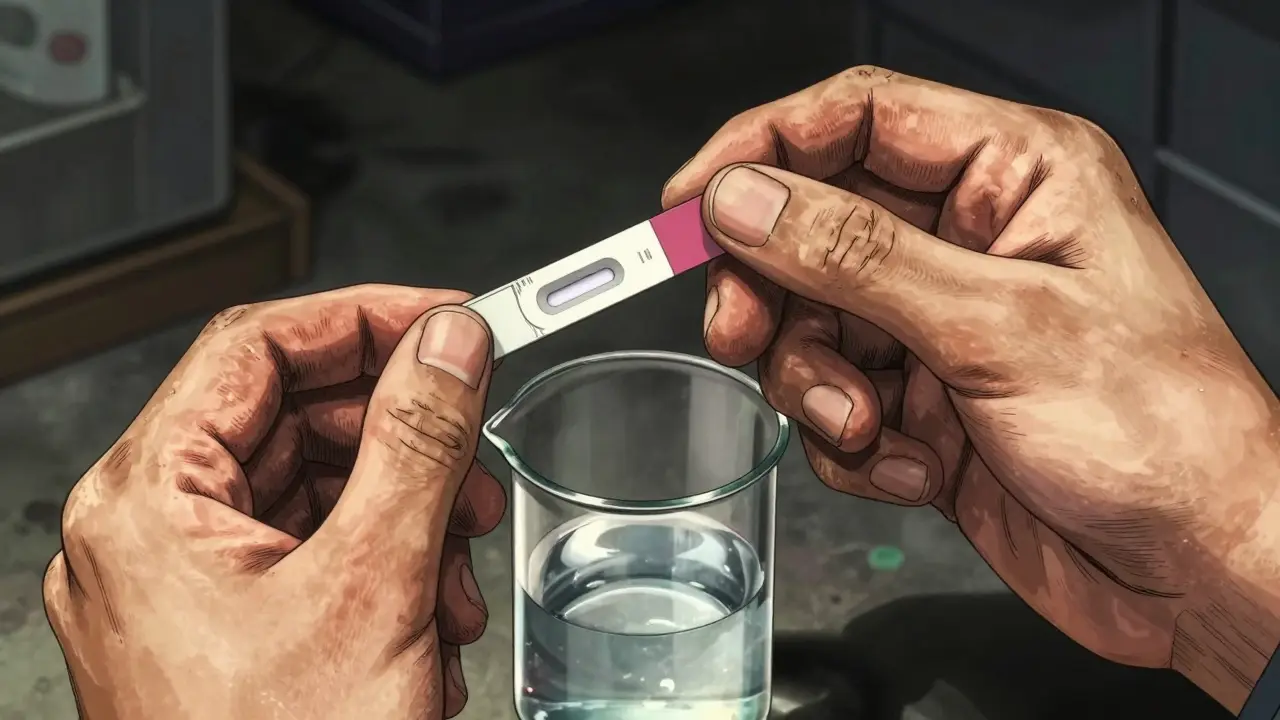
Naloxone reverses an overdose, but how do you prevent it from happening in the first place? You test the drugs. Fentanyl test strips (FTS) are small paper strips that detect the presence of fentanyl in various substances, including cocaine, methamphetamine, heroin, pills, powders, and injectables.
These strips are highly sensitive, detecting concentrations as low as 0.25-1.0 nanograms. They are cheap, easy to use, and discreet. The process is simple: dissolve a tiny amount of the substance in water, dip the strip, wait a few minutes, and read the result. If it tests positive for fentanyl, the user knows the extreme risk involved. They can choose not to use, use less, or ensure naloxone is present and someone is watching.
Critics sometimes argue that testing encourages drug use, but public health experts disagree. Testing provides information that allows for safer decision-making. It is similar to wearing a seatbelt; knowing the risks helps people protect themselves. Many harm reduction sites provide these strips alongside education on interpreting results, including warnings about false negatives.
Medication-Assisted Treatment (MAT): The Long-Term Solution
Prevention isn't just about acute emergencies; it's about long-term stability. Medication-Assisted Treatment (MAT), also known as Medications for Opioid Use Disorder (MOUD), is the gold standard for treating opioid addiction and preventing overdose. It combines FDA-approved medications with counseling and behavioral therapies.
There are three main medications:
- Methadone: Available since 1947, it must be taken daily at specialized clinics. It blocks the euphoric effects of opioids and reduces cravings.
- Buprenorphine: Approved in 2002, it can be prescribed by doctors in private practices. It partially activates opioid receptors, reducing withdrawal symptoms without producing a full high.
- Naltrexone: Approved for opioid use disorder in 2010, it blocks opioid receptors entirely. It is often used after detoxification.
The impact is massive. The World Health Organization reports that opioid agonist maintenance treatment reduces overdose mortality by 50%. Dr. Rahul Gupta, Director of the CDC's Overdose Prevention Program, calls expanding access to MOUD the "single most effective clinical intervention" for preventing overdose deaths. Despite this, only 18.4% of Americans with opioid use disorder received medication-based treatment in 2022. Stigma and lack of providers, especially in rural areas, remain huge barriers. If you or someone you know is struggling, ask a healthcare provider about MAT options. It is not "replacing one drug with another"; it is stabilizing brain chemistry to allow for recovery.
Safety Planning and Community Support
Medications and tests are tools, but human connection is the safety net. A safety plan is a personalized strategy to reduce overdose risk. It includes identifying triggers, listing emergency contacts, keeping naloxone accessible, and deciding on safe usage practices.
One critical rule is: never use alone. The "Never Use Alone" hotline, operational since 2020, connects people with operators who stay on the line while they use substances. If the person becomes unresponsive, the operator dispatches emergency services. In October 2023, the service reported notifying authorities of approximately 12,000 overdose incidents monthly. That is 12,000 lives potentially saved every month by a phone call.
Community education is equally vital. New York State mandates overdose prevention education for all individuals, regardless of diagnosis. Studies show that communities implementing comprehensive education programs see a 37% reduction in fatal overdoses. Talk openly about overdose signs: slow or stopped breathing, pale or clammy skin, pinpoint pupils, and inability to wake up. Recognize these signs, act immediately, and call 911.
| Strategy | Type | Effectiveness/Evidence | Accessibility |
|---|---|---|---|
| Naloxone Distribution | Acute Reversal | 96% success rate when administered correctly | OTC available; free via harm reduction centers |
| Fentanyl Test Strips | Harm Reduction | Detects fentanyl at 0.25-1.0 ng levels | Available online and at harm reduction sites |
| Medication-Assisted Treatment (MAT) | Long-Term Treatment | Reduces overdose mortality by 50% | Requires prescription; access varies by region |
| Never Use Alone Hotline | Emergency Response | ~12,000 interventions per month | Free phone service nationwide |

Addressing Barriers and Stigma
Even with these tools, significant barriers exist. Only 18% of U.S. counties have adequate access to all three FDA-approved MOUD medications, creating "treatment deserts" particularly in rural areas. Furthermore, persistent stigma prevents 41% of people with SUDs from seeking treatment. We must shift the narrative. Addiction is a chronic medical condition, not a moral failing. When we treat it with compassion and evidence-based care, people recover.
Policy changes are helping. Federal funding for state overdose prevention programs increased from $100 million in 2016 to $1.5 billion in 2023. However, geographic disparities persist. Rural counties experience 30% higher overdose mortality rates despite having 50% fewer treatment facilities. Advocacy for expanded telehealth services for buprenorphine prescriptions and mobile naloxone distribution units can help bridge this gap.
Next Steps for You
What can you do today? Start by getting naloxone. It costs little and could save a life. Learn how to use it. Encourage open conversations with friends and family about substance use. If you are struggling, reach out to SAMHSA’s National Helpline at 988 or visit their website for treatment locators. Remember, prevention is a community effort. By sharing knowledge and resources, we build a safety net that catches everyone.
How quickly does naloxone work?
Intranasal naloxone typically begins working within 2 to 5 minutes. It may take up to 10 minutes to fully reverse an overdose. If the person does not respond, administer a second dose after 2-3 minutes and continue CPR if necessary. Note that naloxone's effects last 30-90 minutes, shorter than many opioids, so multiple doses may be needed, and emergency medical attention is always required.
Can I get in trouble for calling 911 during an overdose?
Most states have Good Samaritan laws that protect bystanders and victims from certain drug possession charges when they seek emergency help for an overdose. These laws vary by location, so check your local regulations. However, saving a life is always the priority. Emergency responders are focused on medical stabilization, not arrest.
What are the signs of an opioid overdose?
Key signs include: slow, shallow, or stopped breathing; pale, blue, or clammy skin; pinpoint pupils; choking or gurgling sounds; limp body; and inability to wake up or respond to stimuli. If you observe these signs, assume it is an overdose, administer naloxone if available, and call 911 immediately.
Does fentanyl testing work on all drugs?
Fentanyl test strips are designed to detect fentanyl and some of its analogs. They do not detect other substances like cocaine, methamphetamine, or xylazine. A negative result means fentanyl was not detected at the tested sensitivity level, but it does not guarantee the substance is safe. Always use caution and have naloxone ready.
Is Medication-Assisted Treatment (MAT) considered "clean" recovery?
Yes. Major health organizations, including the WHO and CDC, recognize MAT as a legitimate and effective form of recovery. It addresses the physiological aspects of addiction, allowing individuals to stabilize their lives, engage in therapy, and reduce the risk of relapse and overdose. Recovery looks different for everyone, and MAT is a medically supported path to health.